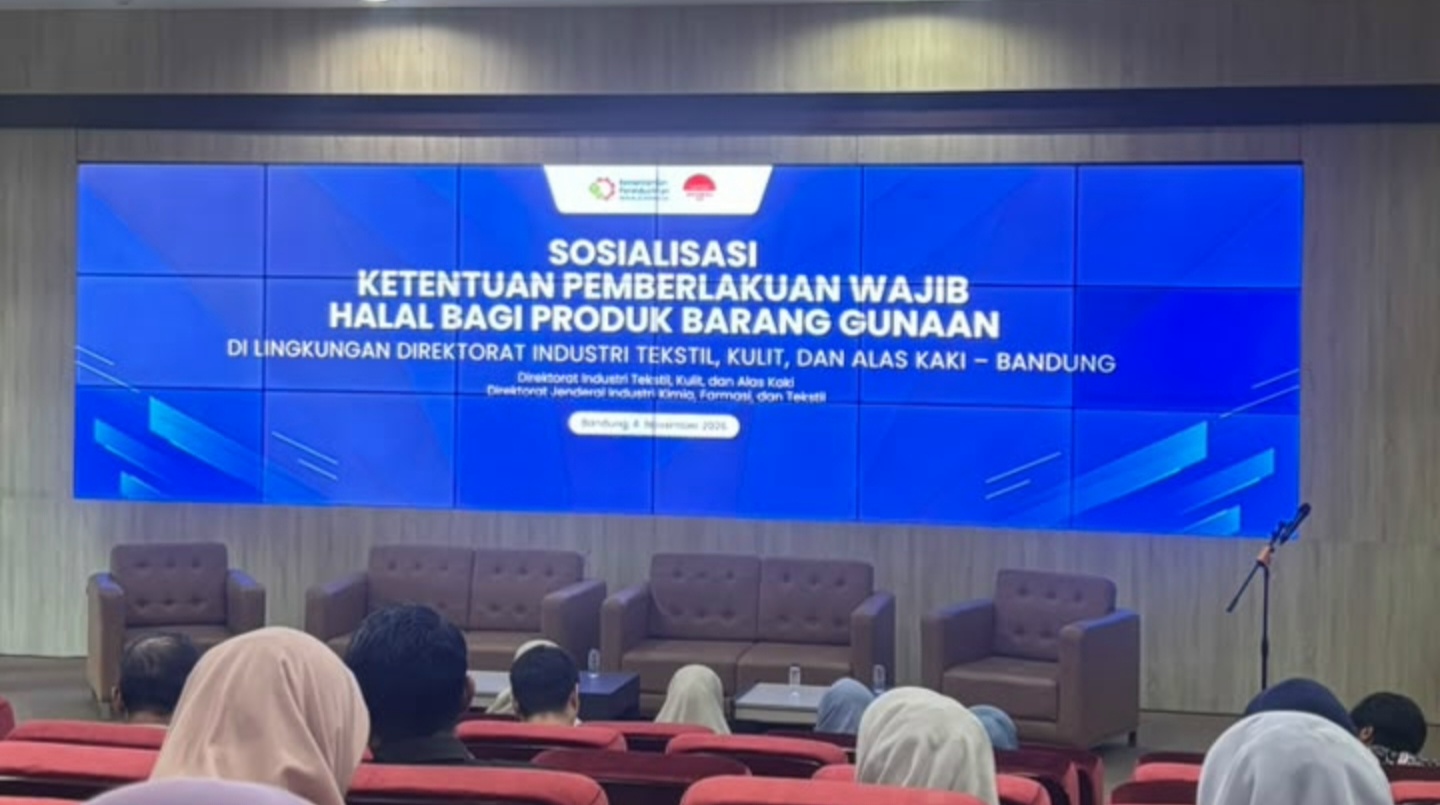
Global Fashion Halal Standard (GFHS) turut menghadiri kegiatan Sosialisasi Ketentuan Pemberlakuan Wajib Halal bagi Produk Barang Gunaan yang diselenggarakan di lingkungan Direktorat Industri Tekstil, Kulit, dan Alas Kaki, Bandung.
Kegiatan ini merupakan bagian dari upaya meningkatkan pemahaman para pemangku kepentingan industri mengenai implementasi regulasi jaminan produk halal, khususnya terkait pemberlakuan kewajiban sertifikasi halal bagi produk barang gunaan.
Sektor tekstil, kulit, dan alas kaki memiliki rantai pasok yang kompleks, melibatkan berbagai jenis bahan baku, bahan penolong, zat kimia, serta tahapan proses produksi. Oleh karena itu, pemenuhan persyaratan halal memerlukan pendekatan yang komprehensif, mulai dari identifikasi bahan, pengendalian proses produksi, ketertelusuran rantai pasok, hingga pemenuhan dokumentasi dan sistem jaminan produk halal.
Partisipasi GFHS dalam kegiatan ini merupakan wujud komitmen untuk terus mengikuti perkembangan regulasi serta mendorong kesiapan industri dalam mengimplementasikan standar halal secara sistematis dan berkelanjutan.
Melalui kegiatan ini, GFHS juga memperkuat perannya dalam mendukung edukasi, pendampingan, standardisasi, dan pengembangan ekosistem halal pada industri tekstil dan fashion. Kolaborasi antara pemerintah, lembaga pendukung, dan pelaku industri menjadi faktor penting dalam membangun industri tekstil Indonesia yang semakin kompetitif dan mampu memenuhi kebutuhan pasar halal global.
GFHS percaya bahwa penerapan standar halal bukan hanya bentuk kepatuhan terhadap regulasi, tetapi juga merupakan langkah strategis untuk meningkatkan kepercayaan pasar, transparansi rantai pasok, serta daya saing industri tekstil dan fashion Indonesia.
Global Fashion Halal Standard (GFHS) also attended the Socialization of Provisions for the Implementation of Mandatory Halal for Consumable Products which was held within the Directorate of Textile, Leather and Footwear Industry, Bandung.
This activity is part of an effort to increase understanding of industry stakeholders regarding the implementation of halal product guarantee regulations, especially regarding the implementation of halal certification obligations for consumer goods products.
The textile, leather and footwear sectors have complex supply chains, involving various types of raw materials, auxiliary materials, chemicals and stages of the production process. Therefore, fulfilling halal requirements requires a comprehensive approach, starting from material identification, production process control, supply chain traceability, to fulfilling documentation and a halal product guarantee system.
GFHS' participation in this activity is a form of commitment to continue to follow regulatory developments and encourage industry readiness to implement halal standards systematically and sustainably.
Through this activity, GFHS also strengthens its role in supporting education, mentoring, standardization and developing a halal ecosystem in the textile and fashion industry. Collaboration between the government, supporting institutions and industry players is an important factor in building an Indonesian textile industry that is increasingly competitive and able to meet the needs of the global halal market.
GFHS believes that implementing halal standards is not only a form of compliance with regulations, but is also a strategic step to increase market confidence, supply chain transparency, and the competitiveness of the Indonesian textile and fashion industry.